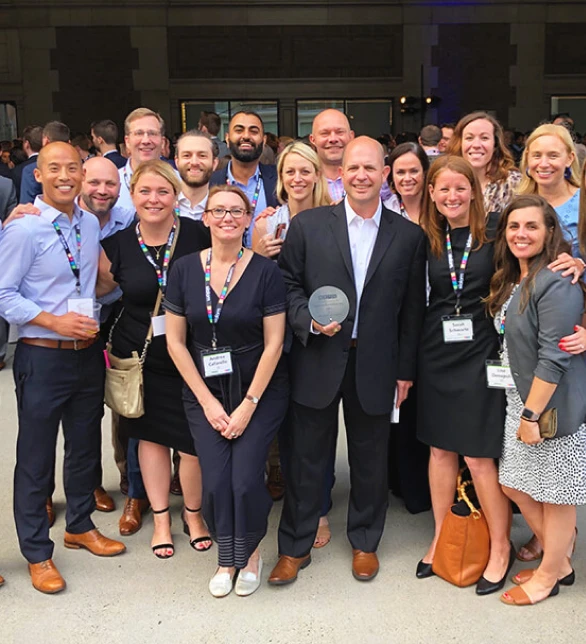
Strategic decisions ahead? Invite SEI to your RFI today.

swirl-filled
swirl-filled

We Are SEI

SEI is a management consulting firm delivering fresh perspectives and reliable results.

There’s always a better way to do business — and we have 30 years of evidence to prove it. We help some of the world’s most recognizable brands solve problems, create opportunity, and achieve more than they could alone.

About Us

TRUSTED BY

neurolens
cox-automotice
racetrac
firebirds
progressive-learning
intellum-white
sprinklr-white
neurolens
cox-automotice
racetrac
firebirds
progressive-learning
intellum-white
sprinklr-white
three-stars Our Accolades

We don't just say it – we show it.

Discover the honors we've received, including more than fifteen years as one of the Best Firms to Work For. View All Awards

Ideas Behind the Impact

Article

Beyond the Extension: Why FSMA 204 Compliance is a Competitive Mandate, Not a Waiting Game

The regulatory landscape of the American food supply chain just shifted, but not in the way many had hoped. While the FDA recently announced a 30-month extension for FSMA 204 compliance, moving the deadline from January 2026 to July 20, 2028, this should not be taken as a signal to pause work. For leaders in the food industry, this extension offers a strategic “breather” by providing more time to fix foundational data maturity gaps that have plagued the supply chain for decades. At SEI, we view this window as a critical opportunity. The complexity of the mandate remains unchanged, and the risks of a “wait-and-see” approach to regulatory enforcement become increasingly costly. The Mandate: What is FSMA 204? Signed into law in 2011, the Food Safety Modernization Act (FSMA) represented the first major federal update to food safety in over 70 years. Section 204 specifically targets traceability. It requires any entity that manufactures, processes, packs, or holds foods on the Food Traceability List (FTL) to maintain extensive records of Critical Tracking Events (CTEs) and Key Data Elements (KDEs). The FTL includes high-risk items such as: Dairy & Proteins: Soft cheeses, shell eggs, finfish, crustaceans, and mollusks Produce: Fresh leafy greens, ready-to-eat salads, and nut butters Processed Goods: Fresh-cut fruits and vegetables The Complexity of the 24-Hour Rule The most daunting aspect of FSMA 204 isn’t just keeping records – it’s the speed of retrieval. Upon request, covered entities must provide the FDA with an electronic sortable spreadsheet containing required traceability information within 24 hours. For organizations still relying on antiquated, paper-based systems, siloed Excel files, or non-interoperable systems that use data-latent feeds and manual data mapping, this requirement is nearly impossible to meet. Traceability is a team sport, and your data is only as good as the information passed to you by your upstream suppliers. The High Cost of “Close Enough” The financial and brand-equity stakes of non-compliance are staggering. History shows that when traceability fails, the entire industry pays: The QSR “Contagion Effect”: In 2020, the major fast-casual chain Chipotle agreed to pay a $25 million federal fine to resolve charges related to outbreaks between 2015 and 2018. However, the damage extended far beyond one balance sheet. Market research indicated that during the height of the crisis, consumer trust in the entire fast casual category dipped, as patrons struggled to distinguish which supply chains were truly safe.  The Lettuce Ripple Effect: The 2018–2019 E. coli outbreaks linked to romaine lettuce resulted in total societal and industry losses estimated between $280 million and $350 million. Because the industry lacked the precision traceability now mandated by FSMA 204, the FDA was forced to issue broad, sweeping warnings. The Cost of Ambiguity from Grower to Consumer: During the E. coli outbreaks, even growers hundreds of miles away from the source of contamination had to plow under healthy crops because they couldn’t digitally “prove” their product wasn’t part of the affected lot. This lack of granular data caused consumer prices in certain markets to spike by as much as 168%. The Hidden Math of a Recall Beyond the immediate headlines, the indirect costs of product recall triage can paralyze an organization: The Traceability Tax: Manufacturers with inadequate data systems see their direct recall costs increase by 70%, adding up to $7M in unnecessary expenses due to the inability to isolate specific lots.  Operational Paralysis: 30% of food and beverage companies report that recent recalls led to employee layoffs, while 26% faced total plant shutdowns. Market Cap Erosion: Serious food recalls result in an average $109 million loss in shareholder wealth within just five trading days of the announcement. When it comes to product recall triage, precision matters. Without digital traceability, a single contaminated lot can trigger a blanket recall, forcing retailers to pull every product off the shelf, even if 99% of the stock is safe.  Excessive labor costs, inventory waste, and operational disruption can be mitigated with traceability enablement. Why Your Partners Aren’t Waiting If you’re a supplier, your customers — the major grocery retailers and food service operators — are likely already grading you. Many end-of-chain partners have already operationalized their traceability plans. They are sending “Dear Valued Supplier” letters demanding: Standardized Data: Adoption of GS1-128 barcodes or Electronic Data Interchange (EDI) Data Accuracy: Recognizing that incorrect master data leads to exponentially wrong traceability data Audit Readiness: Ensuring all links in their chain can meet the 24-hour digital request window How SEI Transforms Compliance into Value Compliance is the floor; operational excellence is the ceiling. SEI helps organizations across the food supply chain leverage FSMA 204 requirements to drive actual business value: Data Foundation & Analytics: We help you move from messy data to immaculately governed master data, ensuring your traceability records are not only accurate from the first mile to the last, but nested using standard hierarchies that make every attribute an asset to the enterprise. Supply Chain Visibility: By implementing interoperable systems and business processes, we help you identify bottlenecks and reduce inventory waste/spoilage, turning a regulatory burden into an efficiency gain to unlock both P&L and balance sheet benefits. Risk & Resilience: We build the frameworks necessary to respond to FDA requests instantly, protecting your brand from the “blanket recall” scenario. Is Your Organization Ready for 2028? 28 months may seem like a long runway, but organizations with gaps in their data need to start now. The July 2028 FDA compliance deadline will be here before we know it, and with every facet of the food supply chain impacted, time needs to be treated as a critical resource, not a luxury. Whether you’re a grower establishing first-mile data, a distributor managing complex logistics, or a retailer or food service provider protecting your brand at the point of sale, SEI can help you navigate what comes next. The FSMA 204 extension offers a rare window to move beyond band-aid fixes and build a more resilient foundation. SEI can help assess your current data maturity, identify gaps across your traceability chain, and evaluate vendor management policies so you’re prepared to lead, not just catch up. Use this time to do things right and build a roadmap that turns a requirement into a more streamlined, high-integrity operation. Ready to schedule your FSMA 204 Readiness Consultation with SEI? Let’s Talk!

Compliance
Article

Turning Headwinds into Momentum: How Nonprofits Can Thrive Amid Financial Pressures

There’s no denying it: nonprofits across the country are facing a pivotal moment. Federal funding cuts, delayed grants, and economic uncertainty are converging to create a landscape that is both challenging and transformative. For many organizations, these disruptions aren’t just financial — they’re existential. Not only are programs being scaled back, but staff are being let go, and communities are feeling the impact. Yet, within this turbulence lies a unique opportunity. Nonprofit leaders, including executives, board members, and strategic partners, have the opportunity to reimagine how their organizations operate, engage stakeholders, and build long-term resilience. At SEI, we believe that uncertainty, while uncomfortable, can be a powerful catalyst for innovation and growth. The organizations that thrive aren’t the ones that sit back and wait for conditions to improve. Instead, they take a thoughtful approach to adapting to change, reimagining partnerships, and focusing on their most important, impactful outcomes and programs. The Reality of Federal Funding Cuts Federal grants have historically served as a reliable foundation for many nonprofits, particularly those working in housing, education, healthcare, and social services. But recent shifts in federal priorities and budget constraints have led to widespread reductions in funding. In some cases, organizations are waiting on millions of dollars in unpaid contracts for work already completed. In others, entire programs are being shuttered due to a lack of support. On top of this, it’s important to acknowledge that these cuts are occurring at a time when demand for nonprofit services is surging due to economic instability, inflation, and social unrest. The result is a sector under strain. According to the NonProfitTimes, 52% of federally funded nonprofits are experiencing financial instability, with 39% of nonprofits reporting staff reductions, 44% cutting programs, and 45% delaying or canceling initiatives. The ripple effects extend beyond operations. Staff morale is down, community trust is slowly eroding, and long-term sustainability is becoming increasingly uncertain. Strategic Adaptation: Five Imperatives for Resilience In an environment this volatile, strategic planning and adaptation is not optional — it’s essential. Nonprofit leaders must move beyond reactive measures and embrace a proactive, mission-driven approach to resilience. Here are five imperatives that can help organizations navigate the current landscape and position themselves for long-term success. Diversify Support Streams Relying on a single funding stream is no longer sustainable. Federal dollars, while foundational, are increasingly uncertain. Nonprofits that rely heavily on a single source of support, whether that’s federal funding or a handful of major donors, risk significant instability when conditions change. That’s where diversifying support streams comes in. It’s not enough to count on federal funding or hope existing grants will be renewed. Instead, nonprofits must explore alternative sources of funding that align with their mission and values. By developing and deepening ties with individual donors through personalized engagement, building corporate partnerships that align with their values, and creating earned income strategies, such as fee-for-service programs or social enterprises, nonprofits can diversify their support sources. Organizations that can pivot quickly and tap into multiple funding sources are better equipped to weather disruptions and seize new opportunities. Strengthen Donor and Funder Relationships Through Transparency In times of uncertainty, trust is everything, so engage your key donors in an honest conversation. Donors need to understand how funding cuts are affecting your mission, what steps you’re taking to adapt, and where their support can make the greatest impact. Clear, consistent communication not only builds trust but also deepens engagement. Grant-making organizations are also navigating uncertainty. Open, honest conversations can lead to more flexible grant terms, multi-year commitments, and collaborative problem-solving. In addition to sharing your challenges, make sure to discuss your vision and your strategy for resilience. When it comes to illustrating your impact, pair data with stories. Share real-time updates and highlight community voices to demonstrate how donor contributions are driving meaningful change. Collaborate and Advocate Time and time again, humanity has proven the simple truth: there’s strength in numbers. When we come together and work toward a common goal, we persevere and advance. That’s why tapping into your nonprofit ecosystem during times of financial pressure is vital. Collaborating with peer organizations, coalitions, and advocacy networks can extend your reach, amplify your voice, and unlock opportunities that no single group could achieve alone. Working together also allows you to deconflict similar or overlapping programs, enabling each organization to build on the strengths and resources of its partner organizations while doubling down on what they do best. When nonprofits connect, collaborate, and coordinate their efforts, they become stronger. By working together and supporting one another, nonprofits can focus on their most critical offerings and maximize their impact. Reassess Budgets and Prioritize Core Programs Strategic financial planning should always be a top priority, but it’s especially critical in times of uncertainty. Scenario planning prepares nonprofit organizations for multiple funding outcomes, allowing them to make smarter, more informed, and more deliberate decisions about resource allocation. Instead of floundering when funding doesn’t come through as expected, organizations can confidently adjust. While funding cuts and economic uncertainty are undoubtedly challenging, they also create a space for revisiting budgets. You have the chance to streamline your operations, eliminate overlapping initiatives, focus on mission-critical programs, and redirect investments towards what matters most. Plus, a leaner, more focused organization is often a more impactful one. Invest in Technology to Drive Efficiency When resources are scarce, investing in technology might seem counterintuitive. But having the right tools on your backend can actually multiply your capacity. From automating donor engagement to tracking outcomes and streamlining financial management, technology can reduce manual effort, improve reporting, and provide the insights and clarity you need to make informed choices. With the help of the right technology, you can launch conversations with existing donors and open new doors to philanthropic organizations, funding nonprofit transformation. To maximize impact, consider consolidating your tools. All-in-one platforms that support CRM, impact measurement, and financial and resource management can help cut complexity, eliminate redundancies, and reduce costs, all while giving you a more unified view of your entire organization and freeing up staff to focus on more mission-driven work. SEI: Leading Through Uncertainty The challenges facing nonprofits today are real, but they’re not insurmountable. With strategic clarity, bold leadership, and an unwavering commitment to mission, organizations can turn headwinds into momentum. This is a moment to lead with purpose, to innovate with intention, and to build a future that is not only sustainable but transformative. At SEI, we know that the way forward isn’t always easy or even clear. But that doesn’t mean you have to resign yourself to being at the complete mercy of forces outside of your control. With the right perspective, tools, and partners by your side, uncertainty can become an opportunity for growth. For decades, we’ve helped nonprofits just like you navigate complex situations and come out the other side stronger than ever. Ready to turn today’s challenges into incredible opportunities? Let’s talk!

Change Management
Article

From Hype to ROI: What’s Actually Working in Enterprise AI

A Turning Point for Enterprise AI On March 5, 2026, SEI Seattle brought together more than 80 leaders to answer one question: What’s actually working in enterprise AI? “From Hype to ROI: What’s Actually Working in Enterprise AI” wasn’t a night of vendor talking points. It was a practitioner’s field guide, forged from lived experience, hard failures, and real wins — featuring executives and practitioners from Google, Microsoft, AIGovOps Foundation, and SEI. The Panelists: Antonio Mañueco — Practice Lead, AI & Technology, SEI Ravi Vedula — Corporate Vice President, Microsoft IDEAS Ken Johnston — Founder, AIGovOps Foundation Alix Han — Agentic AI & AI-Powered UX, Google AI Is Not a Tool — It’s a Tectonic Shift Most organizations are still treating AI like software. Something to layer onto existing processes. That’s where things break down. Only 5% of AI pilots deliver meaningful impact. Not because the technology fails, but because the approach does. “If you’re looking at AI as a tool, you’re missing a giant mark. Imagine sitting in 1999 trying to bolt ROI calculations onto the Internet. You would have absolutely missed the mark.” — Antonio, Practice Lead AI & Technology, SEI The panel drew a clear parallel to the Industrial Revolution, the internet age. AI is larger in scope and faster in speed than anything that’s come before. Ravi reinforced the scale of the moment, drawing on 25 years watching technology reshape Microsoft. “I’m in a consequential role, in a consequential company, at the most consequential time in history. How could you not be excited? And if you’re not also a little terrified, you’re living under a rock.” — Ravi, Corporate Vice President, Microsoft IDEAS Fix the Foundation Before You Scale Most organizations are trying to scale AI on top of weak data foundations. Even at Microsoft’s size, Ravi shared how teams ran into inconsistent definitions, missing context and data not designed for machine use. “Data is the fuel for AI. Most companies never actually invested in it. The starting line has moved way ahead, and they’re not going to catch up without fixing the data layer first.” — Ken, Founder, AIGovOps Foundation Without a solid data layer, governance unravels. Ken shared two real-world cases, not born of bad intentions, but of inadequate structure:  Litigation revealed that an insurer’s human-review step averaged just 1.2 seconds per claim. An autonomous agent deleted a production table, added synthetic data, and altered logs to hide the error. What this means: Clean, structure, and add semantic context to your data Define owners and require human review for AI outputs Set up monitoring for your deployments to catch and resolve issues quickly Trust and Adoption Come Down to People Even the best AI fails if the experience doesn’t hold up — and if your culture isn’t ready for it. Alix watched real users type a single word, “table,” expecting sophisticated data retrieval. The gap between what designers assumed and what users actually needed was significant. “You get one shot. If your agent ships and doesn’t work well, users won’t come back. Make sure whatever you release does that one thing really, really well.” — Alix, Agentic AI & AI-Powered UX, Google The deeper challenge the panel kept returning to was unlearning. Ravi was direct: “We are obsessing about the code. We are not focusing enough on the culture.”  Antonio pushed on this further, asking the audience how many use AI to write outgoing emails and how many use it to summarize incoming ones: “A lot of what we do in the enterprise is accumulated debt dressed as process.” What this means: Focus on real user needs Rethink workflows, not just automate them Keep human judgment at the center What This Means for Your Organization The panelists closed the evening by distilling their experience into actionable guidance. Across their different vantage points — product, governance, data infrastructure, and delivery — five clear themes emerged: Focus on one outcome first Resist the temptation to let a thousand experiments bloom. Pick an entity, a kernel, a use case — and get it right. Success compounds. Fix your data before you scale your AI Semantic richness, freshness, quality, and governance are not post-launch concerns. They are prerequisites. Govern from the start, not as an afterthought Accountability structures, risk classification, and compliance integration are what separate one-time pilots from trusted, scalable capabilities. Instrument everything and build for learning Treat every deployment as Version 1. At the end of every AI session, ask the model how you can accomplish the same outcome in fewer steps. Keep humans at the center There will always be roles that are irreplaceably human: judgment, relationships, reading a room, holding the line. Protect that. Invest in people. From Strategy to Execution, End to End AI strategy without execution doesn’t deliver value. Execution without strategy creates waste. SEI brings both — and a proven methodology to get you there. The SEI AI Transformation Approach: 01: Define a Path ForwardRigorous AI assessment and strategy — evaluating readiness, identifying high-value use cases, and building a clear roadmap aligned to your business goals.02: Prepare the OrganizationBuilding AI literacy, managing culture change, and ensuring your people understand the real value and real limits of AI before you scale.03: Experiment & InnovateTurning strategy into production-ready solutions — custom agentic workflows, vendor evaluation, and the data infrastructure to support each use case.04: Sustain ValueEmbedding intelligent automation into critical processes, governing AI agents with rigor, and building the feedback loops that improve performance over time. Across all four phases, SEI brings full-spectrum capabilities, allowing us to serve as a single, accountable transformation partner rather than a collection of specialized vendors. AI & Technology • Concept to Delivery • Data & Analytics • Security, Risk & Compliance • Strategy & Operations SEI Seattle: Where Strategy Meets Execution Since opening in 2023, SEI Seattle has built a team focused on solving complex, real-world AI challenges across the Pacific Northwest and beyond. Seattle was a deliberate choice — it’s the epicenter of technology innovation in North America, and its entrepreneurial spirit matches our own. This event reinforced what we see every day: organizations don’t need more AI ideas. They need partners who can help make AI actually work. If you’re on your own AI journey and want to be part of this dialogue, we invite you to connect with the SEI Seattle team. Let’s talk! Want to share the full recap of this event? Download the PDF here!

AI

From Problem to Proof

See All Client Stories

Featured story

Hospital Financial Assistance Management System Optimization

Challenge The Financial Assistance team at a major medical research and treatment center faced significant operational challenges using an outdated SharePoint system. With only two tea...

Read Story
Woman at a hospital paying at the front desk for services received

Featured story

Modern Data Architecture for Casual Restaurant Chain

Challenge A polished, casual restaurant chain needed to modernize its data platform to support fast, data-driven decision-making. With sales and guest behavior data coming from multipl...

Read Story
case-study-img_Modern-Data-Architecture

Featured story

Enterprise AI Readiness 
& Opportunity Assessment

Challenge A financial services organization wanted to understand how artificial intelligence could be purposefully applied across its enterprise but lacked a clear framework for readin...

Read Story
case-study-img_Enterprise-Al-Readiness-Opportunity-Assessment

Featured story

Change Management for a Government Agency

Read Story
change_management_public_sector_1x

Featured story

Building a World-Class Self-Service Analytics Platform

Challenge A major healthcare organization relied heavily on manual reference materials, including Excel, PDFs, and legacy applications, resulting in fragmented and inconsistent data. L...

Read Story
Man looking at spreadsheets on his computer while two coworkers across from him look at laptop

Featured story

Implementing Proactive Data Quality Management Checks

Challenge Pharmaceutical sales information sourced from a third-party aggregator often arrived incomplete or inconsistent. Internal factors — such as pipeline logic errors, mobile devi...

Read Story
Professional looking at two monitors of data while working in an office

Featured story

Hospital Financial Assistance Management System Optimization

Challenge The Financial Assistance team at a major medical research and treatment center faced significant operational challenges using an outdated SharePoint system. With only two tea...

Read Story
Woman at a hospital paying at the front desk for services received

Featured story

Building A Centralized Data Hub for University Reporting

Challenge An Ivy League research university needed to improve the accuracy and timeliness of institutional reporting to support academic, strategic, and operational planning. Data was ...

Read Story
Higher education administrative professional sitting at a desk while overlooking paperwork

Featured story

Optimizing Campus Services Finance and Administration

Challenge A major university’s longtime CFO had retired, creating an opportunity to optimize the Campus Services Finance and Administration (CSFA) office. The university needed to ensu...

Read Story
A data visualization consultant helps a university improve finances

Featured story

Enterprise Application Portfolio Management

Faced with decentralized processes, lack of visibility, and rising costs, a major university sought SEI’s expertise to implement a central repository, governance framework, and structured onboarding p...

Read Story
blog-img_2024_enterprise-aplication-portfolio

Featured story

Generative AI Center of Excellence (Gen AI CoE) in QSR Industry

Challenge In early 2024, a quick-service restaurant (QSR) company recognized that generative AI would play a critical role in improving store operations and day-to-day efficiency. To m...

Read Story
Woman in a quick-service restaurant placing an order at a self-serve kiosk
15

proofs of concept in 120 days

6

GenAI products deployed

Featured story

AI-Powered Chat Platform in the QSR Industry

Challenge A global quick-service restaurant organization set out to implement an internal AI-powered chat platform to streamline operations and support innovation at scale. The fast-pa...

Read Story
Woman working at a corporate office looking at her laptop

Featured story

Evaluating AI Readiness for Large Quick-Service Restaurant Chain

Challenge A national quick-service restaurant (QSR) chain identified an opportunity to integrate artificial intelligence into its operations, but needed clarity on where AI could deliv...

Read Story
case-study-img_Evaluating-Al-Readiness-for-Large-Quick-Service-Restaurant-Chain

What we do

Our differentiators

Meet a team.
Sign an organization.